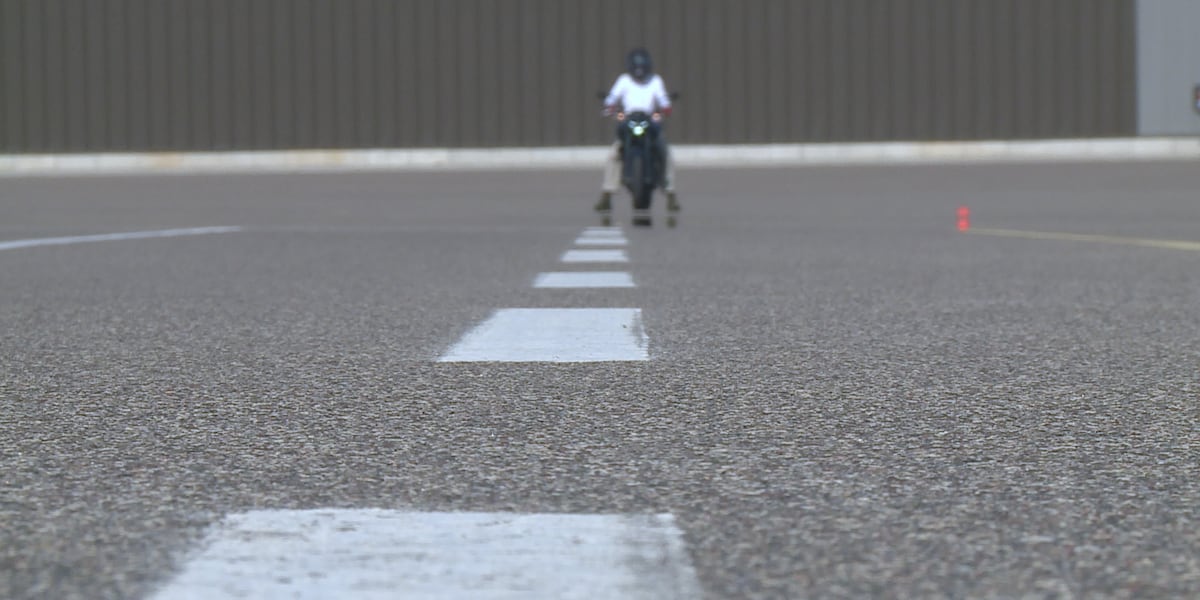
EAU CLAIRE, Wis. (WEAU) – Laws regarding a motorcycle riding between two lanes of slower or stopped traffic have been a point of debate across the U.S. However, a neighboring state has recently joined the small list that does allow it.
Many drivers from Eau Claire make the hour drive to our neighboring state, Minnesota, and just this month, it became the sixth state to legalize lane filtering. Whether you’re on two wheels or four, it is important to know what this could mean for you when you’re out on the road.
“If you hit a car while you’re almost stopped or slow, it’s just a bump. You hit a motorcycle, and it could put them down.” Aaron Larson, the lead instructor for the motorcycle safety program at the Chippewa Valley Technical College, said.
Many people are aware of the dangers of riding a motorcycle, but for motorcycle enthusiasts like Allen Chavez, there is no better feeling than rolling on the throttle.
“You end up feeling like a part of the motorcycle,” Chavez said. “It was just the extension of yourself.”
Chavez lives in Minnesota, and he has been riding with Larson for years.
“I went to College in Eau Claire,” Chavez shared. “I still stay in touch with a lot of those guys, which is crazy, and we laugh about it. It was like everybody else might say, the good old days of riding.”
However, if Chavez and Larson want to ride together moving forward, they have to be aware of a big change on Minnesota roads.
“Both motorcyclists and automobile they have to know the new rules, so they don’t think someone’s doing something wrong, or they don’t try to get road rage and try to cut off the motorcycle,” Larson said.
Until July, the Minnesota state law reflected Wisconsin’s: lane splitting and filtering were illegal.
“People didn’t like the idea of motorcycles cutting in line,” Chavez said.
But that’s in the rearview mirror. Now, motorcycles can ride between two lanes of slower or stopped traffic under certain rules and guidelines. This is something you could see if you travel between state lines.
“With the construction on 94, they’re probably going to run into that same scenario where they could use lane filtering,” Larson said.
Motorcycle riders must abide by a few rules. For example, they cannot exceed 25 miles per hour or 15 miles per hour over the speed of traffic.
“It sounds really fast, but they are only going over what they are traveling,” Chavez expressed. “These cars that are stopped, and you have a bike go past them at, you know, 25, it’s probably going to spook them, or the exhaust system might rattle the car.”
The law also adds penalties for drivers who try to block motorcyclists.
“It will take a lot to get used to for people in Minnesota to see motorcycles coming up between their two cars,” Larson said.
Larson also said the law is meant to keep riders safe.
“Whenever traffic is stopped, it is the most dangerous for motorcycles. People don’t pay attention, and somebody’s on their phone, somebody’s changing a radio station, and that’s usually when accidents happen.”
However, Larson said only time will tell if it is working.
“Not a lot of information to support or dispute lane splitting and lane filtering on crash reports and things like that. They don’t have any box that says there was lane filtering or lane splitting. If it can show that it is even a little bit safer for motorcycles, then I would like to see more states get on board.”
Larson and Chavez both agree that no matter your views on lane splitting and filtering, it’s important to be aware of the different laws in Wisconsin and Minnesota so that when you cross those state lines, you do not break any traffic violations. You can find more information about Minnesota’s new law here.
Copyright 2025 WEAU. All rights reserved.