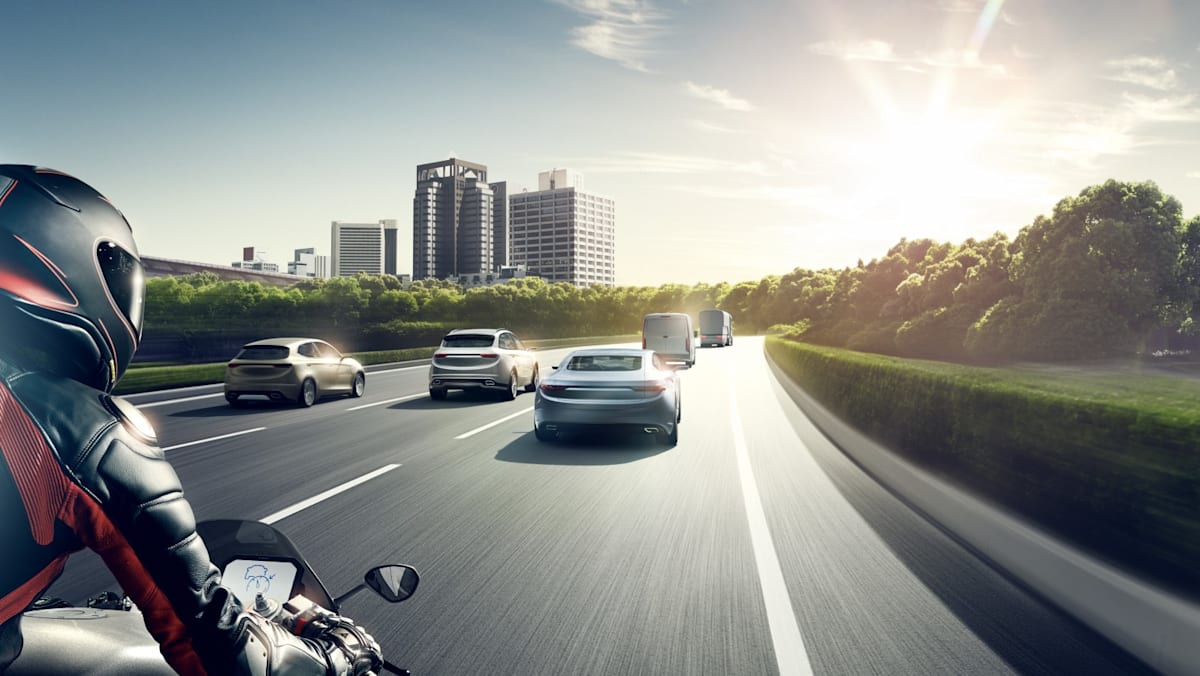
“Riders love the thrill and freedom of riding, and Bosch understands that,” said Mr Mulla. “Our engineers are riders too, so they know that safety should never take the fun out of motorcycling. That’s why Bosch designs safety systems that protect riders while keeping the riding experience just as exciting.”
One example is riding distance assist (RDA), one of the latest ARAS functions. Mr Mulla explained: “It steps in only when the distance to a vehicle ahead becomes critically short. The system may gently reduce acceleration or apply light braking, but the rider can override it by adjusting the throttle.”
He added: “This design ensures the inherent freedom of motorcycling is maintained, while providing an invaluable, non-distracting layer of safety.”
THE ROAD AHEAD
Road and traffic conditions in Southeast Asia are unique, said Mr Mulla, pointing to congested urban streets and widespread use of lightweight motorcycles for daily transport. Bosch’s aim is to make motorcycle safety technology accessible to all riders by first advancing innovations on high-end motorcycles, then adapting them for smaller-capacity vehicles common across the region.
With several Southeast Asian governments promoting the use of electric two-wheelers through incentives for electric vehicles and phasing out of internal combustion engines, Bosch stands ready to provide safety technologies for electric two-wheelers.
“We already have the capability to integrate systems like ABS and MSC on electric two-wheelers, including those with regenerative braking, and we’re continuing to develop additional functions that enhance safety in everyday riding,” Mr Mulla shared.
He added: “Road and riding conditions across Southeast Asia vary a lot, and many of the challenges riders face every day are outside their control. Our focus is on understanding those real-world conditions and designing solutions that improve safety without changing the way people want to ride.”
Learn more about Bosch’s motorcycle safety technologies.