The two moves become legal as of Tuesday, July 1.
EAGAN, Minn. — In the middle of summer, nothing feels better on a motorcycle than a cool breeze.
“105, 110 degree day, that engine gets hot,” David Otis, a Harley-Davidson owner, said. “Sitting in traffic, the engine gets hot if we’re sitting for long periods of time.”
There haven’t been many ways for those riders to avoid traffic in Otis’ time riding – until now.
State officials spoke ahead of Tuesday, the start of July, and the start of several new laws in Minnesota.
“They’re very closely related, lane splitting and lane filtering,” Mike Hanson, director of the Office of Traffic Safety, said.
The two moves have been discussed for months. DPS has been doing outreach since last year to inform the public about the two moves that riders will be legally allowed to perform starting Tuesday.
Riders argue the two moves are safer for them, as they allow them to avoid being between cars during stop-and-go traffic, and allow them to move ahead of stopped traffic.
Hanson says their goal with educating is to avoid any incidents.
“Last year, we lost 76 riders in completely preventable events on Minnesota roads,” he said. “That’s completely unacceptable. One rider lost, one driver lost, one passenger lost is far too many.”
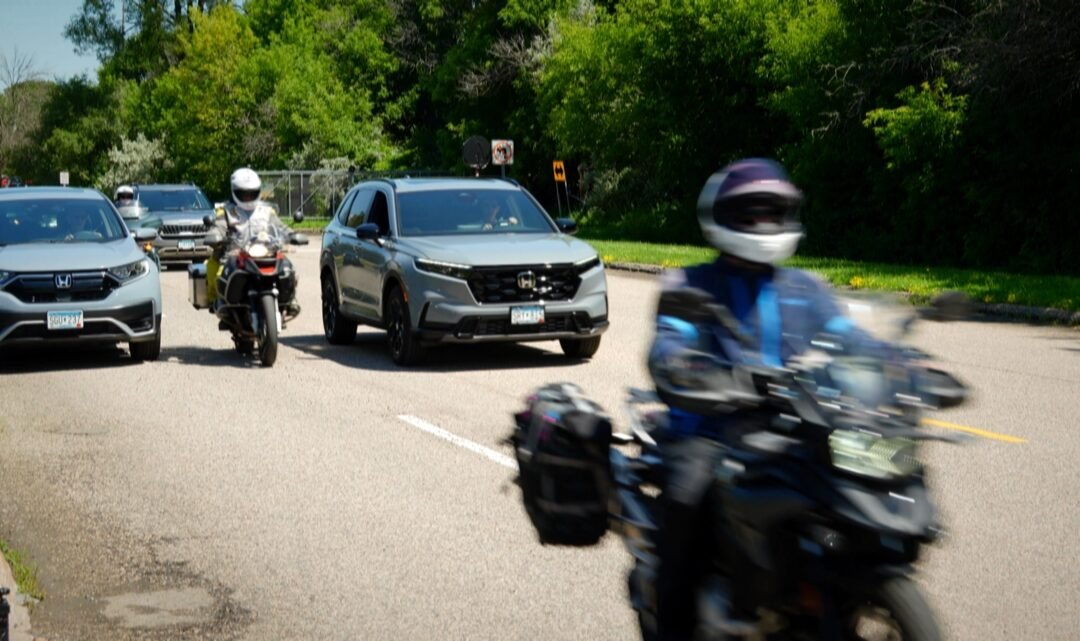
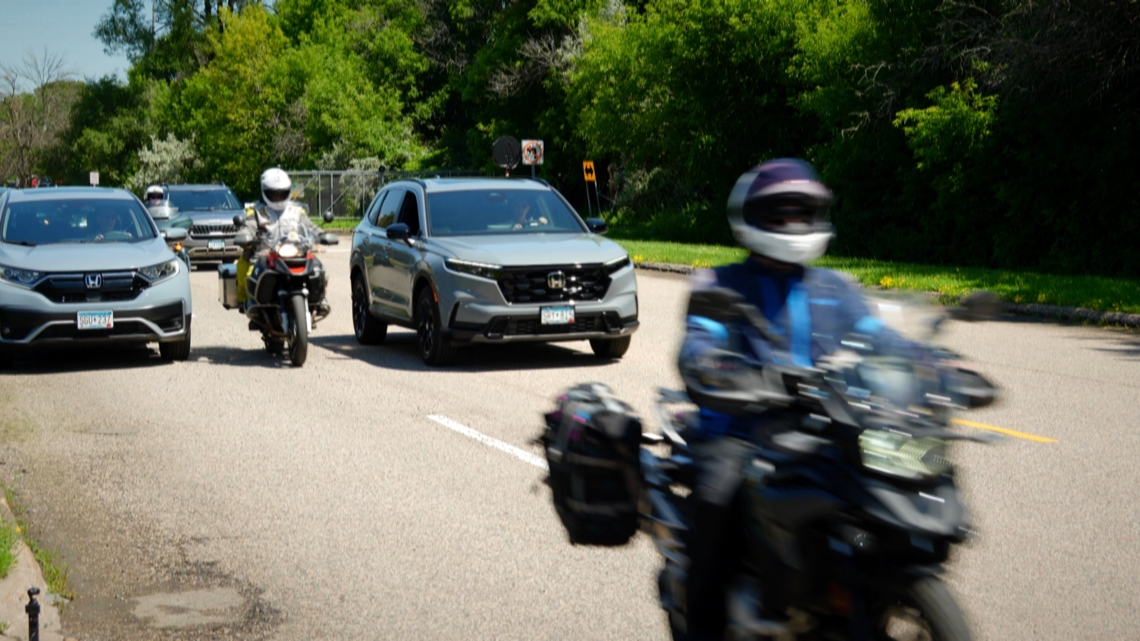
Officials shared a demonstration with members of the media Monday, to show how both work.
Lane filtering allows motorcycles to move through traffic that is stopped, such as at a stoplight or in a traffic jam. The motorcyclist cannot go more than 15 mph as they filter toward the front of the line of traffic.
“Wait for traffic to go, whether it’s a green or a stop sign or whatever,” Jay Bock, MMSC motorcycle safety administrator, said.
Lane splitting allows a motorcycle to share a lane with and pass a vehicle in slow-moving traffic at no more than 25 mph, and no more than 15 mph over the speed of traffic. Once traffic gets back up to 25 mph, the motorcycle must go back into its own lane of traffic.
Hanson admits that DPS had concerns about the law change, but says now they’re focused on making sure everyone stays safe.
“We all know our roads are busier and more congested than they’ve ever been, and we’re adding another element to that roadway congestion and all of the busyness going on around it,” Hanson said. “And so there were some concerns raised with with how we could roll this out effectively and safely for everybody.”
That concern, especially heading into the Fourth of July weekend, is why the message from all here is simple – everyone needs to pay more attention to each other on the roads.
“The right opportunity, certainly exercise your right to lane split or lane filter,” Otis said. “But take your time.”
For more information on the changes, click here.